x

رام الله – 25/10/2023 – يدين مركز الديمقراطية وحقوق العاملين في فلسطين استمرار الاعتقال غير القانوني لحوالي 4000 عامل فلسطيني من قطاع غزة من قبل إسرائيل، ويدعو المجتمع الدولي والحركة العمالية الدولية للتدخل من أجل الإفراج الفوري عنهم.

منذ 7 أكتوبر 2023، قامت الشرطة الإسرائيلية وحرس الحدود باعتقال عمال غزة واحتجازهم في مراكز الشرطة ومن ثم في معسكرات الجيش في ظروف مزدحمة وغير صحية، مع حرمانهم من الطعام والماء لفترات طويلة، وفقًا لشهادات العمال الذين تم إطلاق سراحهم لاحقًا وترحيلهم إلى الضفة الغربية. في 10 أكتوبر، ألغت إسرائيل بشكل جماعي حوالي 18,500 تصريح عمل للعمال الفلسطينيين من قطاع غزة العاملين في إسرائيل، مما حول آلاف العمال الغزيين الذين كانوا يعيشون ويعملون في إسرائيل في ذلك الوقت إلى “مقيمين غير شرعيين” وفقًا للمنظور الإسرائيلي. بالإضافة إلى ذلك، تم اعتقال ما لا يقل عن 100 عامل من غزة، الذين وصلوا إلى الضفة الغربية، من أماكن إقامتهم المؤقتة خلال مداهمات الجيش الإسرائيلي الأسبوع الماضي في محافظتي الخليل وبيت لحم. يُقدر أن حوالي 4000 عامل محتجزون حاليًا لدى إسرائيل، في معسكر عناتوت العسكري قرب عنبتا ومعسكر عوفر قرب بيتونيا في الضفة الغربية المحتلة، وربما في معسكر عسكري إسرائيلي آخر في صحراء النقب.

نشعر بقلق بالغ إزاء ظروف احتجاز عمال غزة ومصيرهم، حيث يتم احتجازهم بمعزل عن العالم الخارجي. لم يُسمح للعمال بالتحدث إلى محامين، كما لم تؤكد اللجنة الدولية للصليب الأحمر ما إذا تمكنت من زيارتهم أم لا. ولم تتمكن السلطة الفلسطينية أو جمعيات حقوق الإنسان من الحصول على قائمة بأسماء العمال المحتجزين وأماكن احتجازهم. في الواقع، قدمت ست منظمات حقوقية في إسرائيل، وهي مركز هموكيد، ومركز جيشا، واللجنة العامة لمناهضة التعذيب في إسرائيل، وأطباء من أجل حقوق الإنسان في إسرائيل، وعدالة، والجمعية الإسرائيلية للحقوق المدنية، التماسًا إلى المحكمة العليا الإسرائيلية في 23 أكتوبر 2023، تطالب فيه المحكمة بأن تأمر الجيش الإسرائيلي، وخدمة السجون، والشرطة الإسرائيلية بالكشف عن أسماء العمال ومواقعهم والإفراج عنهم.

لم توضح إسرائيل وضع عمال غزة الذين اعتقلتهم، ولم تقدم أي مبررات لاستمرار احتجازهم، سوى التصريح بعدم إمكانية إعادتهم إلى غزة. هؤلاء العمال مدنيون، ويعتبرون أشخاصًا محميين بموجب اتفاقية جنيف الرابعة. لقد خضعوا لتدقيق أمني دقيق من قبل السلطات الإسرائيلية قبل إصدار تصاريح عمل لهم، مما يعني أنهم لا يشكلون أي خطر أمني حتى ولو كان ضئيلاً.

في ضوء ما سبق، نحن قلقون جدًا من أن ظروف احتجاز عمال غزة لا تلبي الحد الأدنى من المعايير التي حددها القانون الإنساني الدولي، وأنهم معرضون لأشكال مختلفة من سوء المعاملة الفردية والجماعية. نخشى أيضًا أن يكون احتجاز عمال غزة قد تم بهدف استخدامهم كورقة ضغط من قبل إسرائيل، مما يعني أنهم يُعتبرون رهائن. وفقًا لبيان مركز هموكيد: “تشير الشهادات التي تلقاها مقدمو الالتماس من رجل فلسطيني احتُجز في معسكر عناتوت إلى أن ظروف الاحتجاز في المراكز كانت سيئة للغاية. تم احتجاز الرجل في إسرائيل في 8 أكتوبر لمدة ثلاثة أيام في هيكل يشبه القفص، معرضًا للعوامل الجوية، دون طعام أو ماء أو دواء أو فراش، ودون الوصول إلى مرحاض. تم نقله لاحقًا إلى معسكر آخر وصفه بأنه “حظيرة مواشي”، حيث تم احتجازه مع مئات العمال من غزة. وفي مرحلة معينة، قال لهم ضابط إنهم محتجزون بسبب وجود رهائن إسرائيليين في غزة، وأنه طالما ظل الرهائن الإسرائيليون في غزة، فلن يتم الإفراج عنهم”.

بناءً على ذلك، ندعو المجتمع الدولي والحركة العمالية الدولية للمطالبة بالإفراج الفوري عن عمال غزة المحتجزين لدى إسرائيل، ونطالب بإعادتهم إلى غزة أو إلى الضفة الغربية حتى يتم ضمان عودتهم الآمنة إلى غزة وعائلاتهم.
يدعو مركز الديمقراطية وحقوق العاملين في فلسطين إلى الإفراج الفوري عن عمال غزة المحتجزين لدى إسرائيل.

رام الله – 25/10/2023 – يدين مركز الديمقراطية وحقوق العاملين في فلسطين استمرار الاعتقال غير القانوني لحوالي 4000 عامل فلسطيني من قطاع غزة من قبل إسرائيل، ويدعو المجتمع الدولي والحركة العمالية الدولية للتدخل من أجل الإفراج الفوري عنهم.

منذ 7 أكتوبر 2023، قامت الشرطة الإسرائيلية وحرس الحدود باعتقال عمال غزة واحتجازهم في مراكز الشرطة ومن ثم في معسكرات الجيش في ظروف مزدحمة وغير صحية، مع حرمانهم من الطعام والماء لفترات طويلة، وفقًا لشهادات العمال الذين تم إطلاق سراحهم لاحقًا وترحيلهم إلى الضفة الغربية. في 10 أكتوبر، ألغت إسرائيل بشكل جماعي حوالي 18,500 تصريح عمل للعمال الفلسطينيين من قطاع غزة العاملين في إسرائيل، مما حول آلاف العمال الغزيين الذين كانوا يعيشون ويعملون في إسرائيل في ذلك الوقت إلى “مقيمين غير شرعيين” وفقًا للمنظور الإسرائيلي. بالإضافة إلى ذلك، تم اعتقال ما لا يقل عن 100 عامل من غزة، الذين وصلوا إلى الضفة الغربية، من أماكن إقامتهم المؤقتة خلال مداهمات الجيش الإسرائيلي الأسبوع الماضي في محافظتي الخليل وبيت لحم. يُقدر أن حوالي 4000 عامل محتجزون حاليًا لدى إسرائيل، في معسكر عناتوت العسكري قرب عنبتا ومعسكر عوفر قرب بيتونيا في الضفة الغربية المحتلة، وربما في معسكر عسكري إسرائيلي آخر في صحراء النقب.

نشعر بقلق بالغ إزاء ظروف احتجاز عمال غزة ومصيرهم، حيث يتم احتجازهم بمعزل عن العالم الخارجي. لم يُسمح للعمال بالتحدث إلى محامين، كما لم تؤكد اللجنة الدولية للصليب الأحمر ما إذا تمكنت من زيارتهم أم لا. ولم تتمكن السلطة الفلسطينية أو جمعيات حقوق الإنسان من الحصول على قائمة بأسماء العمال المحتجزين وأماكن احتجازهم. في الواقع، قدمت ست منظمات حقوقية في إسرائيل، وهي مركز هموكيد، ومركز جيشا، واللجنة العامة لمناهضة التعذيب في إسرائيل، وأطباء من أجل حقوق الإنسان في إسرائيل، وعدالة، والجمعية الإسرائيلية للحقوق المدنية، التماسًا إلى المحكمة العليا الإسرائيلية في 23 أكتوبر 2023، تطالب فيه المحكمة بأن تأمر الجيش الإسرائيلي، وخدمة السجون، والشرطة الإسرائيلية بالكشف عن أسماء العمال ومواقعهم والإفراج عنهم.

لم توضح إسرائيل وضع عمال غزة الذين اعتقلتهم، ولم تقدم أي مبررات لاستمرار احتجازهم، سوى التصريح بعدم إمكانية إعادتهم إلى غزة. هؤلاء العمال مدنيون، ويعتبرون أشخاصًا محميين بموجب اتفاقية جنيف الرابعة. لقد خضعوا لتدقيق أمني دقيق من قبل السلطات الإسرائيلية قبل إصدار تصاريح عمل لهم، مما يعني أنهم لا يشكلون أي خطر أمني حتى ولو كان ضئيلاً.

في ضوء ما سبق، نحن قلقون جدًا من أن ظروف احتجاز عمال غزة لا تلبي الحد الأدنى من المعايير التي حددها القانون الإنساني الدولي، وأنهم معرضون لأشكال مختلفة من سوء المعاملة الفردية والجماعية. نخشى أيضًا أن يكون احتجاز عمال غزة قد تم بهدف استخدامهم كورقة ضغط من قبل إسرائيل، مما يعني أنهم يُعتبرون رهائن. وفقًا لبيان مركز هموكيد: “تشير الشهادات التي تلقاها مقدمو الالتماس من رجل فلسطيني احتُجز في معسكر عناتوت إلى أن ظروف الاحتجاز في المراكز كانت سيئة للغاية. تم احتجاز الرجل في إسرائيل في 8 أكتوبر لمدة ثلاثة أيام في هيكل يشبه القفص، معرضًا للعوامل الجوية، دون طعام أو ماء أو دواء أو فراش، ودون الوصول إلى مرحاض. تم نقله لاحقًا إلى معسكر آخر وصفه بأنه “حظيرة مواشي”، حيث تم احتجازه مع مئات العمال من غزة. وفي مرحلة معينة، قال لهم ضابط إنهم محتجزون بسبب وجود رهائن إسرائيليين في غزة، وأنه طالما ظل الرهائن الإسرائيليون في غزة، فلن يتم الإفراج عنهم”.

بناءً على ذلك، ندعو المجتمع الدولي والحركة العمالية الدولية للمطالبة بالإفراج الفوري عن عمال غزة المحتجزين لدى إسرائيل، ونطالب بإعادتهم إلى غزة أو إلى الضفة الغربية حتى يتم ضمان عودتهم الآمنة إلى غزة وعائلاتهم.


Demand a #CeaseFireNow for #GazaUnderAttack

International humanitarian law prohibits the targeting of healthcare personnel and health facilities and transport during hostilities and warfare. They must be protected at all times, as do the patients in their care.

Since October 7, 2023, through its uninterrupted bombing and shelling campaign on the Gaza Strip, #Israel has:

– killed 28 healthcare personnel while on duty or through the bombing of civilian homes

– of them, 10 paramedics have been killed and 27 injured will attempting to save lives

– targeted ambulances, of which 23 have been destroyed or damaged to the point that they can no longer be used

– damaged 15 healthcare centers

– fired white phosphorous shells at a children’s hospital (Al-Dura hospital), which had to be immediately evacuated

– damaged another two hospitals, Beit Hanoun hospital and Hamad rehabilitation hospital, which had also to be evacuated

– ordered 23 hospitals in the northern area of Gaza to evacuate, affecting about 2000 patients. Massive evacuation of hospital patients is not possible in a context where much of the civilian infrastructure has been destroyed and many patients cannot be moved.

– Gaza’s hospitals have been running out of medical supplies and fuel for generators, there is no space and no capacities to adequately care for the flow of injured

DO NOT STAY SILENT, especially if you are a #unionist and/or a #healthcareworker. Please share and speak out against the targeting of Palestinian #healthcareheroes , call for their protection, for an immediate ceasefire and for humanitarian aid to get into Gaza immediately.

PSI – Public Services International

النقابة العامة للعاملين في الخدمات الصحية – محافظات غزة

Sources of information: Palestinian Ministry of Health, UN OCHA Opt

Join us in calling for an immediate ceasefire in #Gaza_Under_Attack and an urgent intervention by the international community to prevent the forced transfer of Gaza’s population

* Humanitarian aid must be allowed into the Gaza Strip to provide medical supplies, food, drinking water, sanitation to the civilian population

* The week-long uninterrupted aerial bombing and shelling of Gaza had already killed 1537 Palestinians, among them 500 CHILDREN and 273 women by last night according to the Ministry of Health, and injured 6612 persons, including 1644 children and 1005 women. The Ministry also indicated that 44 families were in their homes by Israeli bombs.

* 423,000 Palestinians have been internally displaced according to the UN

* A couple of hours ago, Israel ordered 1.1 million Palestinians to leave the northern and Gaza governorates with 24 hours and not to come back before it says they can. This concerns about half the population of the Gaza Strip. The UN said it would be impossible. Furthermore, the forcible transfer of protected persons is prohibited under international humanitarian law. All member States of the UN and the Geneva conventions need to intervene urgently to stop any attempt by Israel to undertake a massive #EthnicCleansing of Palestinians in Gaza and prevent a new #Nakba.

We call upon the labor movement, civil society organizations and citizens worldwide to speak up and ask their politicians and governments to uphold international law and protect Palestinian civilians.

Please keep us informed about your solidarity steps and initiatives, and do not hesitate to contact us for any info you may need.

The Democracy and Workers’ Rights Center in Palestine denounces beatings and humiliating treatment inflicted by Israeli police, border guards and civilians on Gazan workers employed in Israel and calls for urgent labor movement solidarity

Ramallah, 11/10/2023 – The Democracy and Workers’ Rights Center in Palestine denounces an upsurge of acts of verbal, physical and economic violence against Gazan workers employed in Israel, which include arbitrary arrests, beatings and humiliating treatment by Israeli police, border guards and civilians, and denial of wages. The violence inflicted upon Palestinian workers from Gaza appears to be part of Israeli State-fostered and sanctioned retaliation and revenge against Palestinian civilians following the Al-Aqsa Flood operation by Hamas militants.

While the mistreatment of Gaza workers bears no comparison to the ordeal suffered by their families in the Gaza Strip, subjected to uninterrupted Israeli bombing and shelling since last Saturday, which has already caused thousands of civilian casualties (the latest Health Ministry updates indicates that over 1055 have been killed and 5184 injured, and more than 490 of the killed are women and children), it also constitutes a breach of international humanitarian and human rights law.

A 35-year-old worker from Al-Shuja’ia neighborhood, Salim, said that the Israeli police and border guards stormed the house that he and other workers had been renting for many months in Safad, destroyed their belongings, beat them up, handcuffed and blindfolded them. Salim suffered a broken hand and contusions all over his body. They were then transported by vehicle to an unknown location, while soldiers kept insulting them and using humiliating language in Arabic and threatening that Gaza will be wiped from the earth. Salim declared: “They put us in small rooms and cells in a police station, the place was very foul smelling. Ten workers were forced into cells made to accommodate three persons. For hours while we were detained, they kept interrogating us and denied us food, water and using the bathroom.”[1]

Several similar incidents have been reported in the past two days. Another worker told DWRC that he and others were beaten up inside an Israeli police station, before being deported to Beit Sira checkpoint in the Ramallah and Al-Bireh governorate. After rounding-up and assaulting workers, interrogating and detaining them for hours in appalling conditions, Israeli police or border guards have been dumping them at checkpoints near Palestinian localities in the West Bank. Many workers have also reported being handed over by their employers or labor intermediaries to the Israeli police, especially in southern Israeli areas. All the workers that DWRC talked to in Ramallah said that their wages have not been paid. Some indicated that they are owed thousands of shekels for their work. They also said that the phones of workers rounded-up by the Israeli police, or handed over to the police by their employer, have been confiscated. “Lucky” workers were provided transportation by their employer or the labor intermediary to checkpoints leading into the West Bank, or have been able to reach them by foot.

DWRC condemns all acts of retaliation and revenge against Palestinian civilians, and is very concerned for the safety and well-being of Gazan workers, who are still in Israel, especially those with whom their comrades said they have lost all contact. We are also extremely worried by the immediate and long-term consequences of the steep rise of hate-speech, and dehumanizing anti-Palestinian discourse, by Israeli politicians, army officials, soldiers and civilians. Palestinian workers are already routinely victims of degrading and humiliating treatment by Israeli army, border guards, police and security agents at checkpoints, they have been regularly subject to arrest campaigns, shot at and killed for trying to enter Israel without permits, and subject to sporadic assaults by civilians, so violence against Palestinian workers trying to earn a living is not new and is well-documented. We are concerned that such violence will increase exponentially, and that workers might be massively laid off without compensations in the wake of current events.

We call upon the international labor movement to mobilize for the provision of international protection to Palestinian civilians, upholding the human rights of Palestinians, and to ensure that Gazan workers in Israel are protected from all acts of violence and are reunited with their families as soon as the situation allows.

We would also be grateful for any assistance to help provide for the urgent needs of Gaza workers stranded in the West Bank. While emergency shelter has been provided to them in community centers and some houses, conditions are already very crowded in Ramallah and more workers are arriving by the hour. Alternative accommodation will have to be found and many basic necessities will need to be provided, as workers were unable to bring anything with them. Workers we met with expressed urgent needs for clothing (especially underwear and night clothes) and shoes, as well as electrical cords and plugs, so they can charge their phones and keep in touch with their families.

For inquiries and further information, please contact:

Maryam Al Tibi,

maryam@dwrc.org


[1] Interview published in Al-Quds newspaper, page 4, 11/10/2023, in an article titled “Al-Quds documents workers’ testimonies after they were arrested, mistreated, and deported to Jenin”

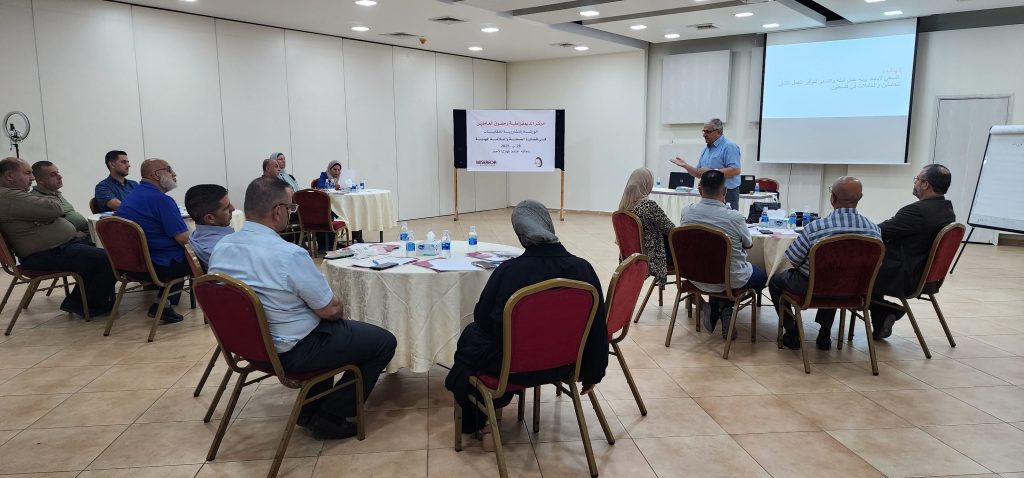
The Democracy and Workers’ Rights Center implements a workshop to discuss occupational safety and health at work

The Democracy and Workers’ Rights Center implemented on 28/08/2023, a workshop in Ramallah to discuss issues related to occupational safety and health with the participation of 18 union representatives. During the workshop participants discussed conditions and mechanisms to achieve a safe work environment, and ensured the important role of trade union representatives in negotiating with employers to provide OSH tolls and equipment to workers in different work sectors. Not forgetting to mention the importance of raising awareness among workers about complying with OSH tools and equipment. Participants also discussed the importance of forming OSH committees at work and the need to play a role in monitoring the application of safety procedures at work. They also recommended the need to highlight violations related to OSH at work, and the provision of tools and equipment, improve communication with relevant bodies including the civil defense and the Red Crescent, and conducting dialogue with employers about the need to provide insurance against work injuries to workers.

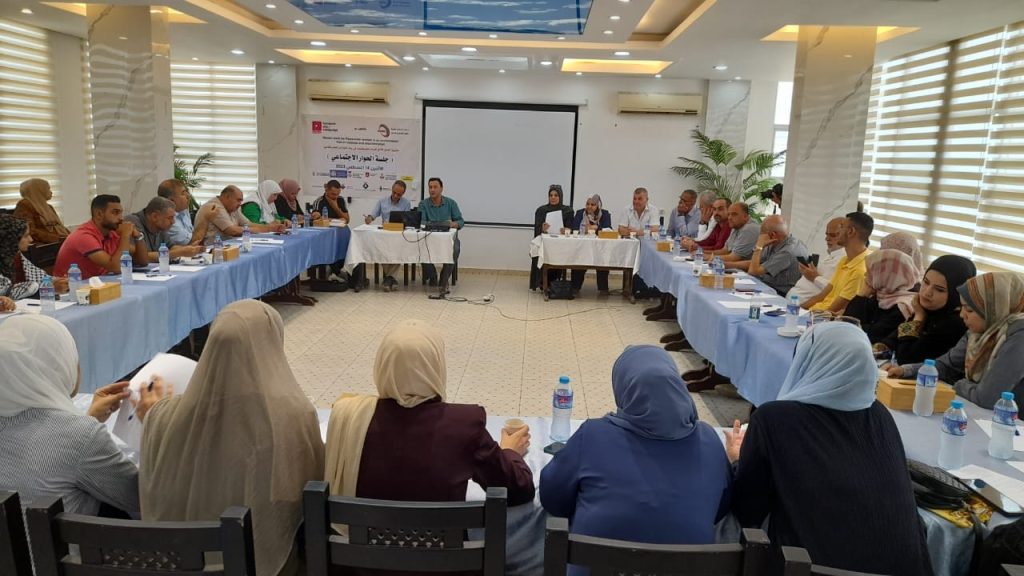
The Democracy and Workers’ Rights Center implements social dialogue sessions to improve women’s access to decent jobs

The Democracy and Workers’ Rights Center implemented four social dialogue sessions in Beit Hanoun, Khan Younis, Rafah, and the Middle governorate aiming to improve women’s access to decent jobs. The sessions were attended by representatives of labor offices, municipalities, Civil Society Organizations, unions, and cooperatives.

During the session violations that women are exposed to in the labor market were highlighted including violence, discrimination, and harassment at work that form a real obstacle when it comes to achieving decent jobs for women. Participants stressed the importance of joining efforts to enhance cooperation between various stakeholders to achieve effective progress in enhancing women’s participation in the labor market, and removing barriers that stands in the way of achieving equality at work.

The Democracy and Workers’ Rights Center implements a training course about leadership skills for trade unions

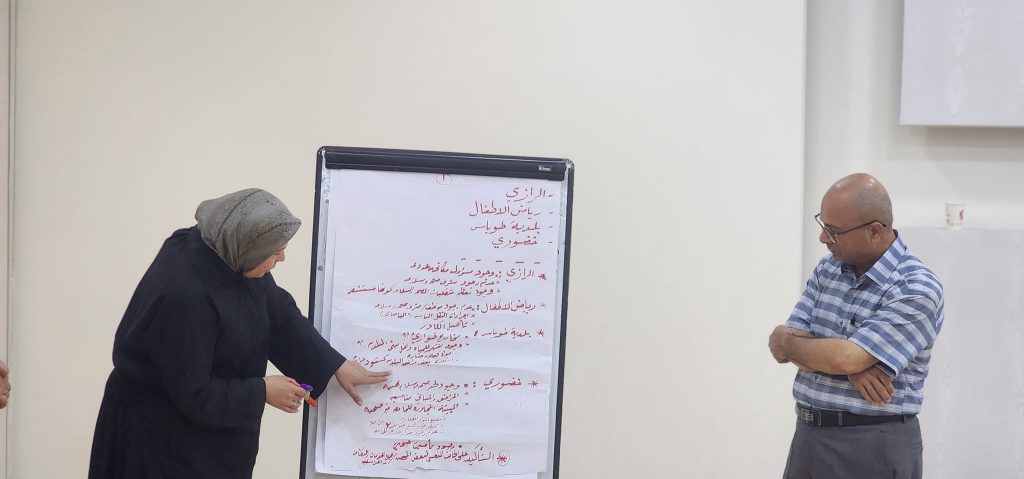
DWRC concluded a three-days training course focusing on building the leadership skills for unionists in Ramallah on 09/09/2023. The training course focused mechanisms of establishing trade unions, internal regulations, accountability, the role of the administrative bodies within trade unions, women’s role in trade union action, elections in trade unions, and decision making. Participants also had the chance to discuss amendments required on related Palestinian laws in terms of protecting the right to organize and trade union action.

DWRC implements a training on media and life skills, through digital tools

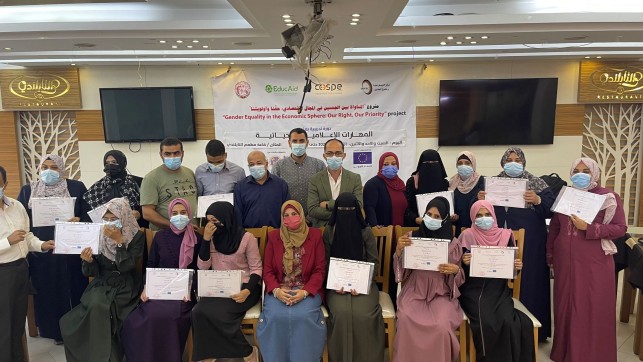
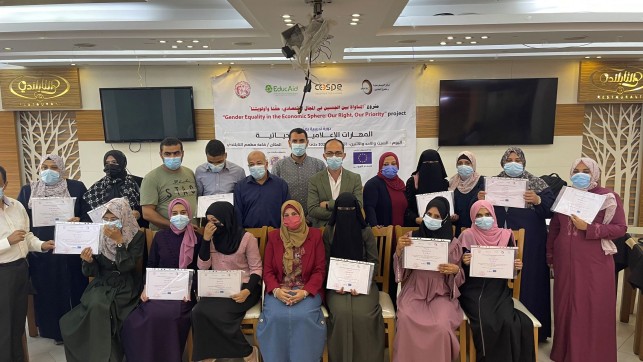
Gaza, 09/11/2021- Representatives of civil society organizations in the Gaza Strip, who participated in a specialized training course on media and life skills implemented by DWRC from November 6 to 8, 2021, concurred that it will enable their organizations to make a qualitative leap towards enhancing their media presence, as it will reflect positively on their performance and will allow them to develop plans to enhance their digital and media access to more target groups, in order to serve women’s rights issues.

The training course aimed to develop the skills of grassroots women’s organizations towards enhancing their media and digital presence, and their ability to be actors of change, especially with regard to women’s economic issues, and to promote the principle of equality and non-discrimination in their communities, with the aim of fostering social change and working for gender equality in the world of work.

The course was attended by 18 female and male participants, representing nine women’s associations, cooperatives and unions, namely the United Cultural Society from Rafah, the Rafah Agricultural Cooperative, Beesan Benevolent Association, Nebras Association for Social Development, Rural Women Development Society, Juzour Al-Zeitoun Society, Zeina Cooperative, the Kindergarten and Day-Care Employees’ Union, and the PGFTU women’s department.

The training course was led by journalist and social media consultant Sultan Nasser Juha, and relied on practical exercises. It dealt with journalistic writing skills for addressing gender issues and enhancing the principle of gender equality, writing press releases, editing news, conducting interviews, advertising and carrying out press conferences, in addition to mobile phone filming skills. Abdullah Shaath, from the United Cultural Society in Rafah, confirmed: “This training will contribute to a qualitative leap for my association, especially since the “learning by doing” methodology used by the trainer contributed in refining our abilities and breaking the barrier of fear that hampered us from undertaking media work.” He added: “Such specialized training contributes to enhancing the media and digital presence of associations and target groups.”

The training also focused on developing the associations’ media plans and employing digital tools to advocate for female and male workers’ rights, and promote and disseminate a culture of gender equality. Hind Abu Amra, from the Nibras Community Society in Deir al-Balah, said: “The training paved the way for developing my digital and media presence, in addition to enabling me to address gender equality issues through effective media content that may contribute to bringing about change.” Another trainees, Fatima Al-Dardasawi, from the Juzour Al-Zeitoun Society in Gaza Governorate, stated that the training broke many barriers, most importantly the barrier of fear and of speaking in front of an audience. She said “I participated in practical exercises on conducting interviews, preparing press releases and delivering them in a speech to the course participants”.

This course is an activity of the “Gender Equality in the Economic Sphere: Our Right, Our Priority” project, which is implemented by DWRC in partnership with COSPE, the Palestinian Working Woman Society for Development and EducAid, and is funded by the European Union. The course was co-financed by the PSAC – Social Justice Fund.

An event about best practices of local authorities

Within the framework of the “Gender Equality in the Economic Sphere: Our Right, Our Priority” project, the Democracy and Workers’ Rights Center organizes an event about best practices of local authorities in creating an enabling environment for women’s work

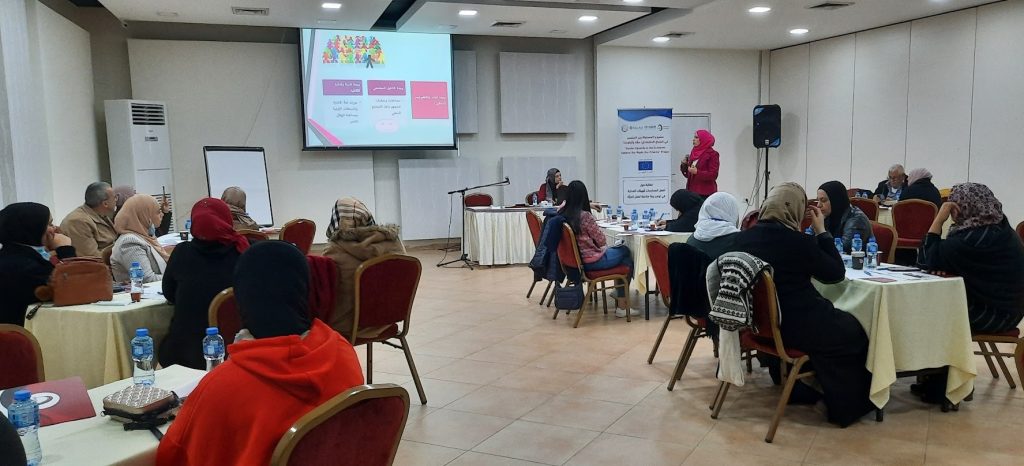
Ramallah – 20/12/2021- On Thursday December 16th, 2021, the Democracy and Workers’ Rights Center in Palestine organized an event to highlight best practices of local authorities in creating an enabling environment for women’s work. The event took place at the Palestinian Red Crescent Society in Al-Bireh and was attended by 32 male and female participants, including representatives of the Ministry of Women’s Affairs, the Ministry of Local Government, municipalities, local councils, shadow councils, and women’s grassroots organizations. This event to highlight best practices is among the activities of the project “Gender Equality in the Economic Sphere: Our Right, Our Priority”, implemented by DWRC in partnership with Italian NGOs COSPE and EducAid, and the Palestinian Working Woman Society for Development, and which is funded by the European Union.  

Mrs. Huwaida Ahmed, from DWRC, welcomed participants and emphasized the importance of the role of ministries, local authorities, and CSOs in providing an enabling environment for women’s involvement in the labor market. She also stressed the necessity of interventions at the local level to reinforce women’s economic participation, as well as the importance of exchanging knowledge and experiences in this regard to contribute in spreading them.

Mr. Yousef Odeh, in charge of the Supportive and Guidance Committees “Isnad” at the Ministry of Women’s Affairs, highlighted the role of the ministry, in cooperation with the Ministry of Local Government, in involving women in the “Isnad” committees in local authorities since the start of the Covid-19 Pandemic. Mr. Odeh added: “the ministry formed around 300 permanent supportive committees, consisting of qualified women and spread in the various villages, cities, towns, and refugee camps throughout the various governorates, with an average of seven members each. The “Isnad” committees aim at providing guidance and supportive interventions for all social segments, with a special focus on marginalized groups. The committees, additionally, contribute in creating youth leaders that play a role in changing stereotypes about women’s participation in various spheres of life, and enhance women’s political, social, and economic empowerment”.

Mr. Sayel Hannoun, director of public relations and media at the Ministry of Local Government, emphasized the role of women within the sustainable development process, fostered through a series of programs implemented by the ministry to empower women and reinforce their participation. Mr. Hannoun added “the Program to Empower Women in the Decision- Making Process implemented by the ministry is designed to increase women’s presence in local governance bodies. The program endeavors to develop the capacity of women members in local authorities and connecting them with women figures and leaders, through integrated guidance interventions”.

Representatives of the municipalities and local councils then presented the best practices they applied to facilitate women’s economic participation and empower them. In this regard, Mrs. Tamara Haddad, a member of al- Bireh Municipality Council, presented the initiatives, awareness-raising programs, training courses, guidance activities, humanitarian and developmental assistance that the municipality implemented to support women in general, and women with disabilities in particular. She indicated that they intensified their support during the spread of the Covid-19 pandemic, as they created a special fund to support women with disabilities, in addition to holding a weekly farmer’s market at al- Bireh Cultural Center, and holding training courses for women to start and execute small income-generating projects.

Mrs. Hiba Mustafa, the head of the public relations department at Anabta Municipality in Tulkarem governorate, presented the role of the municipality in encouraging women’s participation in economic activities. According to Mrs. Mustafa, the municipality arranged several exhibitions to market women’s products, in addition to other interventions to improve the quality of life for women, including women with disabilities. On a related level, Ms. Khadija Aqra from Qabalan Municipality presented the main interventions and initiatives that the municipality implements to enhance women’s participation in the economic sphere, including women with disabilities. Among these mentioned initiatives, she mentioned a project to create work opportunities for women in cooperation with UNRWA, as well as a Cultural Forum for the youth graduates and a library. Moreover, women were invited by the municipality to participate in preparing the developmental plan. The municipality of Qabalan also initiated a training program for women with disabilities and cooperated with the Ministry of Women’s Affairs to form an “Isnad” Committee in the town. Likewise, Mr. Usama Hamran, presented several initiatives and programs undertaken by Arraba Municipality in Jenin governorate to empower women economically, including assigning a piece of land to implement a women agricultural project, from which 9 women benefited.

Ms. Asmahan Awawda, member of el- Koum Local Council in Hebron Governorate, talked about her outstanding role in developing the local council’s activities and activating women’s role in their community, and this despite a variety of obstacles that she managed to overcome thanks to support of the former head of the local council. Ms. Awawda added that she managed, through the support of the community, in establishing a women’s center in the area, Eathar Center, which is the first center in the area to provide services for women. Youth activist Bayan Abu Fkheida, from Ras Karkar Association- Ramallah, presented her role in activating women’s role in the village. She added that through the activities organized by the “Isnad” Committee formed in Ras Karkar, she managed to recruit the support of the local council for a bazaar for women entrepreneurs’ products organized by her association. Ms. Abu Fkheida added: “the association seeks to support and enhance women and youth initiatives in order to activate women’s societal role, and advance women’s leadership abilities in all sectors, alongside with developing the capacity of rural women to participate actively in public life”.

The event contributed in fostering exchange of experiences between participants, and concluded with a number of recommendations, among them the importance of institutionalizing women units within municipalities and local councils, and considering these units as a pillar of the local governance bodies’ structure. Additionally, participants recommended spreading knowledge about the law governing local authorities among all the local governance entities, and training newly elected women members in order to unify the level of knowledge among all the members of the local governance bodies. Moreover, they recommended to undertake a precise assessment of the needs of women within local authorities in order to reflect these needs in the competent ministries’ plans and strategies.

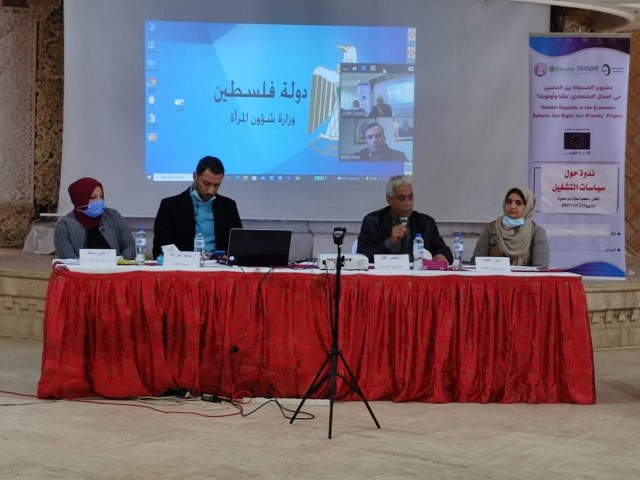
Gaza CSOs discuss employment policies and their impact on women with representatives of governmental institutions.

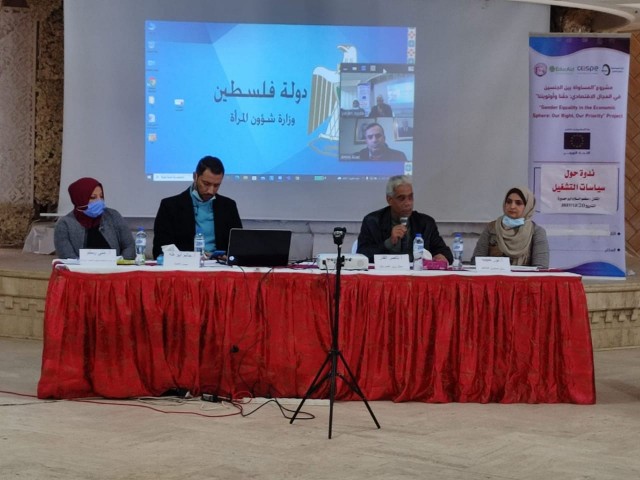
Gaza, 21/12/2021 – On March 20, 2021, the Democracy and Workers’ Rights Center in Gaza organized a thematic seminar on employment policies, attended by 60 representatives of civil society organizations and trade unions, which aimed at enabling CSOs activists to acquire knowledge about specific policies, plans and mechanisms they should refer to or interact with in order to defend women’s labor and economic rights.

The seminar was held in light of women’s situation in the world of work, which for many is characterized by low wages and the absence of a decent work environment, not to mention prevailing legal issues that require urgent attention and the unification of efforts by ministries, trade unions, employers, CBOs and women’s organizations in order to develop a clear national plan that gives priority to integrating women into the labor market and advancing their rights, improving women’s participation in non-traditional professions and reducing unemployment among them, and creating opportunities to enhance women’s capabilities and improving their access to decent work.

The seminar’s participants issued several recommendations, among them necessity of an optimal implementation of employment policies in Palestine to address rights violations in the labor market, especially violations of women’s rights. They also recommended working on re-instating the Social Security Law, expediting the implementation of the minimum wage decision in the Gaza Strip and amending the provisions of the Labor Law, to ensure the provision of social protection for all groups. Furthermore, they highlighted the need to support and encourage women’s small businesses in remote areas, market their products, form qualified human resources, and focus on vocational training and capacity building for women and youth. Finally, they stressed the need to improve prevailing societal views about women’s work and encouraging their economic participation, as well as using modern technology to serve women, and compel the government and the private sector to implement the 5% employment quota for persons with disabilities, increase this percentage, and adapt workplaces, in order to achieve social justice for them.

The seminar is part of the “Gender Equality in the Economic Sphere: Our Right, Our Priority”, implemented by the Democracy and Workers’ Rights Center in Palestine (DWRC), in partnership with the Palestinian Working Woman Society for Development (PWWSD), COSPE, and EducAid, and which is funded by the European Union.

 DWRC’s Gaza coordinator, Mrs. Mona Rostom, opened the seminar and spoke about its objective, and the Center’s vision about the necessity of implementing the National Employment Strategy and the responsibility of each ministry towards implementing related policies, regulations, and mechanisms, as well as the role of CSOs in this regard.

Mr. Amin Assi, the representative of the Ministry of Women’s Affairs, who participated remotely from Ramallah, presented the ministry’s plan. He said: “the Ministry seeks to increase women’s participation rate in the labor market in partnership with the Labor Ministry and CSOs; there is a necessity to increase the number of day-care centers and men’s participation in domestic work, and adopt a paternity and parental leave to support women, in addition to approving the Social Security Law, and protecting female workers from harassment in workplaces.” He added: “We need to improve education outcomes by orienting women towards specialties required in the labor market, tightening admission procedures for specializations, providing grants for women, targeting remote areas and protecting workers in the informal sector.”

Mr. Nasser Al-Far, representative of the Minister of Labor, spoke about the role of the Ministry of Labor and the situation in Palestine due to the Covid-19 pandemic, and the pandemic’s effects on the world of work and how it has impeded the correct implementation of employment policies, noting that thousands of workers have been laid off. He said: “we must work together to develop the TVET system and support labor market policies. The government seeks to attract funding for all development projects, improve conditions in general, and provide social protection”.

Mrs. Nour Habib, representative of the Fund for Employment in the Gaza Strip, said: “Reducing poverty and unemployment is among the fund’s objectives, and we contributed in providing thousands of temporary job opportunities in partnership with the government and civil society institutions”.

Dr. Salameh Abu Z’eiter, representing trade unions, spoke about the Sustainable Development Goals, particularly Goal 8, which concerns enhancing economic growth for all and providing decent work, equality and justice and non-discrimination, and the eradication of poverty. He said: “We must strive to have a society free from hunger and poverty, where peace prevails and human rights are respected, and where working women are empowered and involved in policy-making”.

Mrs. Haneen Al-Samak, an expert on disability issues, presented the situation of persons with disabilities in Palestine, and said: “workplaces must be adapted to the needs of persons with disabilities, particularly women with disabilities, and there must be a focus on prohibiting their exploitation. We must put pressure for the implementation of laws, and activating sanctions”.

Mr. Yasin Abu Odeh, the representative of the Palestinian Working Woman Society for Development in Gaza, and Mrs. Abeer Al-Ghoul, representing the General Federation of Trade Unions, agreed that the seminar had a positive effect for representatives of organizations and trade unions, as it presented and discussed the National Employment Strategy for the years 2021-2025, and the Ministry of Women’s Affairs national plan, which should be accessible to everyone. At the end of the seminar, participants called for formulating the recommendations and working together to send them to all relevant parties, with the necessity of submitting them to the government, especially the Ministry of Labor through its representative.