x

DWRC May Day Solidarity Greetings and Statement from Palestine

On the occasion of May Day 2026, the Democracy and Workers’ Rights Center in Palestine extends its comradely solidarity greetings to workers worldwide and its sisters and brothers of the labor movement and all progressive forces, particularly those most affected by imperialistic wars of aggression and short-sighted lawless politics driven by greed. The circle of those affected has expanded exponentially, as workers continue to be forcibly displaced, robbed of their livelihoods and the opportunity to earn a living in dignity, not just in Palestine and Lebanon, but across all regions and continents. At the same time, fundamental rights and freedoms everywhere are under attack, amidst utter disregard for the most basic dispositions of international humanitarian and human rights law that should protect us all. On this day, we renew our pledge to continue fighting for democracy, peace and justice, and decent work for all, working hand in hand with partner unions and organizations, and friends all over.

In Palestine, Israeli occupation policies and measures, and daily systemic violence, have transformed workers’ attempts to realize their right to work into a daily battle for survival. Gaza workers are still waiting for early recovery measures and programs to start, amidst an overall destruction rate of over 80% of all infrastructure, including economic establishments and workplaces. In the West Bank, the prolonged crisis is no longer limited to widespread unemployment, but is characterized by growing restrictions on access to work and further eroding of wages.

Data from the Palestinian Central Bureau of Statistics indicates the depth of the prolonged crisis facing the Palestinian labor market. 74% of pre-war jobs have been lost in the Gaza Strip. The overall unemployment rate in occupied Palestine reached about 46% in 2025, 28% in the West Bank and 68% in the Gaza Strip, while the number of unemployed persons exceeded 650,000. In the West Bank, the Israeli occupying power has continued severely restricting the issuance work permits to Palestinian workers, with only 51,000 workers (of them 14,000 work permit holders) employed in the Israeli labor market until the end of 2025, leaving tens of thousands of workers and their families without income.

This crisis is further exacerbated among most vulnerable groups, as young people face great difficulty entering the labor market, with unemployment rates rising to about 43% in the West Bank. Palestinian women’s participation in the labor market, with about 19% of women of working age inside the labor force, compared to 70% of men, also remains one of the lowest in the world, with the current circumstances of insecurity and job scarcity further jeopardizing their access to work.

Israel’s illegal withholding of clearance revenues that should be paid to the Palestinian Authority, which constitute about 60% of the Palestinian Authority’s revenues and are estimated at about 4.5 billion US$, has caused the authority to be nearly insolvent, and salary arrears to its employees have accumulated. At best, employees are paid 50% to 70% of their monthly salary, when some funds can be mobilized, and all new recruitment has been frozen since 2024. This affects women and persons with disabilities disproportionally, as the Palestinian civil public service is a major employer for them. According to indicators issued by the Palestinian Monetary Authority, many employees also rely on prior loans. While installments for repaying these loans have been adapted and rescheduled, they are deducted directly from their partial salary and most employees have little left to cover their basic needs.

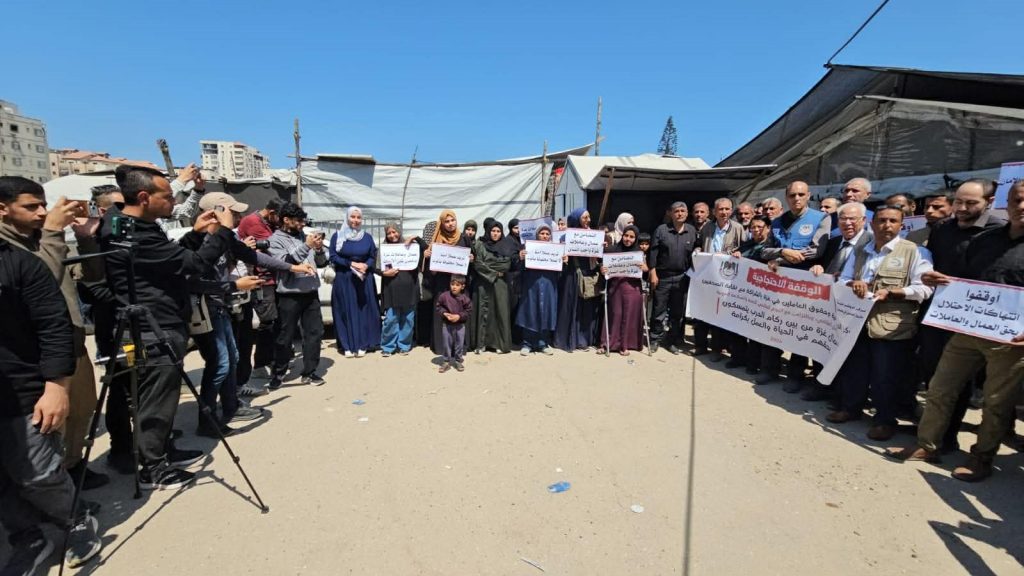
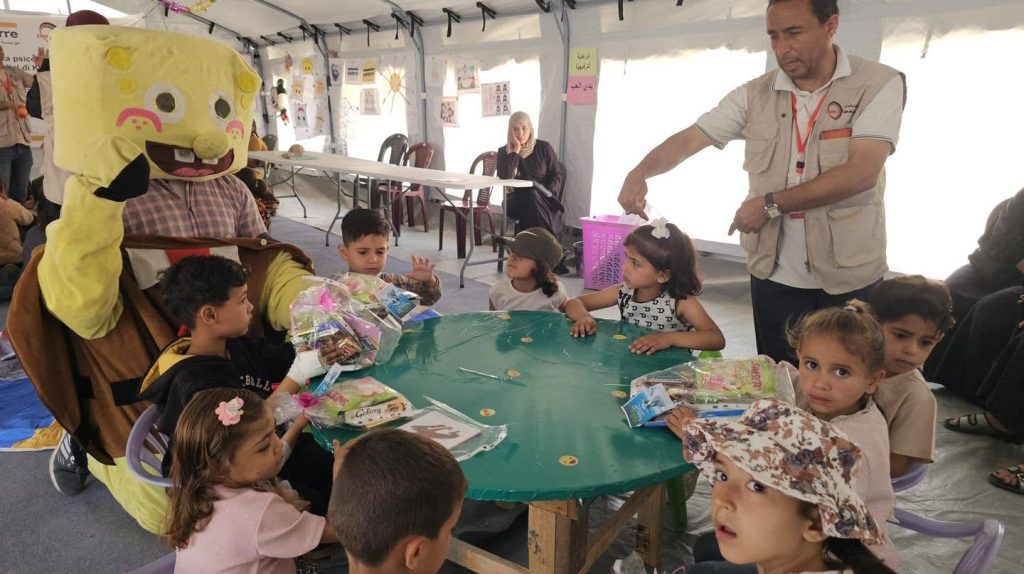
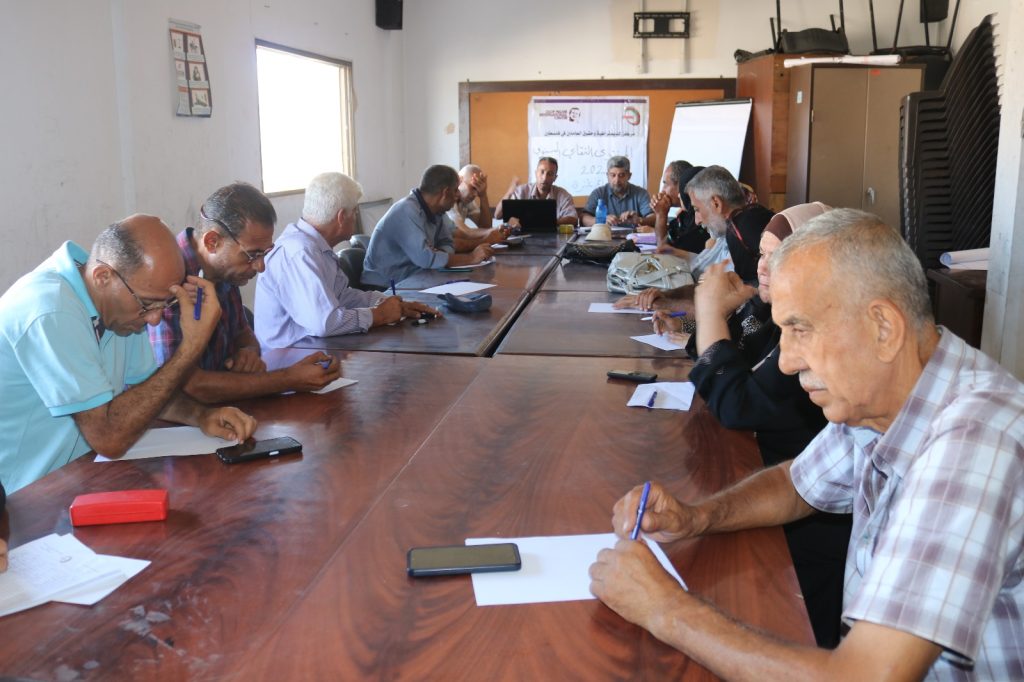
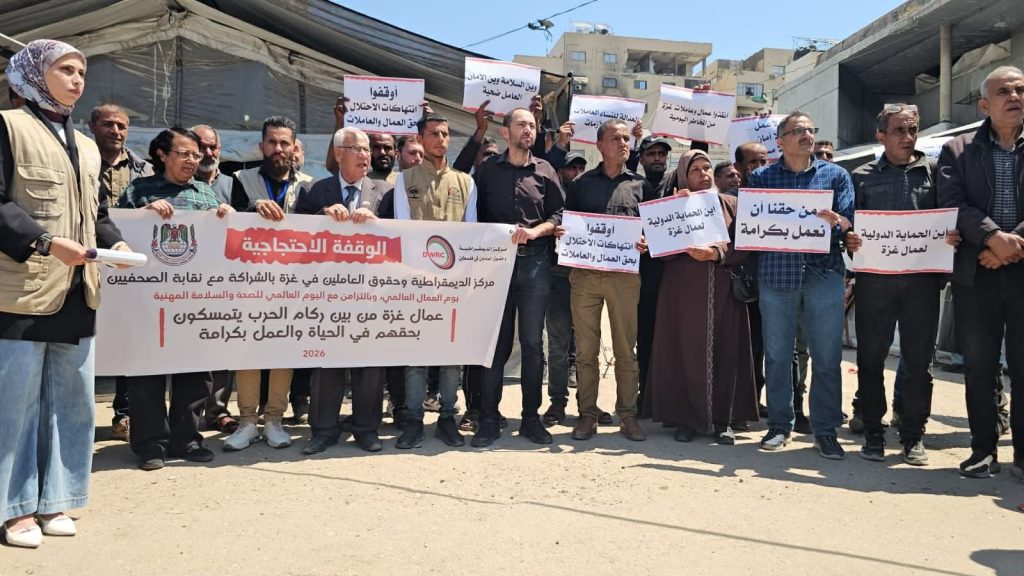
With the severe deterioration of economic conditions and the lack of job opportunities, an increasing number of workers are resorting to informal work in the absence of stable employment opportunities. 60% of those employed in the West Bank are in informal employment. About 15% of wage workers (the percentage is higher among women workers) are still earning less than the minimum wage of 1,880 shekels per month, while prices have been rising and many are now unable to afford transportation to and from work. The challenges faced by Palestinian workers under Israeli occupation, from destroyed businesses and farms, restricted access to workplaces, loss of job opportunities, and shrinking salaries, to the expansion of informal work and weak legal protections, constitute a direct violation of their fundamental right to decent work. This year, Gaza female and male workers, unionists and journalists have come together to demand protection and jobs, during a joint event organized by DWRC, the Palestinian Journalists Syndicate and labor unions. More than ever, we need stronger international solidarity and advocacy to end impunity and ensure abidance with international law, and develop protections for human rights in general and workers’ rights in particular. We also call on the international community to fulfill its obligations under international conventions, and hold all those committing violations of the UN charter and human rights accountable for their acts, regardless of the perpetrators. 

World day for Safety and Health at Work 2026: Palestinian workers under Israeli occupation continue to face unprecedently high occupational hazards

Ramallah – 28 April 2026 – Workers around the world are commemorating this day in a deteriorating context, where traditional work hazards intersect with an unsafe work environment resulting from ongoing restrictions and rights violations, compounding occupational safety and health threats and undermining workers’ right to a safe and dignified work environment.

This is particularly true in Palestine, where occupational risks to which Palestinian workers are exposed have increased manifold. Such risks are no longer limited to working conditions, but extend to direct threats to workers’ lives and affect their general physical and mental well-being, including when they commute to and from work. The continuous system of restrictions on movement imposed by the Israeli occupation on Palestinians inside the occupied Palestinian territory includes permanent, occasional and sudden checkpoints, long delays, denial of access to workplaces, detention of workers, accompanied by exhausting hours of deliberate waiting at the Israeli occupation’s checkpoints. Some workers have also been shoot while trying to reach their jobs. The United Nations Office for the Coordination of Humanitarian Affairs (OCHA) recorded 925 obstacles to movement[1] and about 2000 incidents of movement restriction during the year 2025, an average of 38 incidents per week. While Israeli permit revocations and restrictions in place since October 2023 ban most former Palestinian workers in the Israeli labor market from returning to their prior jobs, the Palestinian Central Bureau of Statistics indicated that about 51 thousand workers were employed in Israel and Israeli settlements in the fourth quarter 2025. In light of the restrictions imposed on movement and access, these workers are particularly vulnerable to hazards, lack of protection, and exploitation, as some workers are forced to take dangerous ways to reach their workplaces. On 14/4/2026, in a particularly marking incident, a garbage truck carrying about 70 Palestinian workers from the West Bank trying to reach their jobs in the Israeli labor market was stopped by the Israeli police, and the workers were detained. Seeking desperately to earn a living, they had been piled up in suffocating, humiliating and life-threatening conditions inside a closed container, in a particularly unhygienic environment. Since October 2023, UN OCHA has documented the killing of 16 Palestinians and the injury of more than 246 others, while trying to cross the apartheid wall separating the occupied West Bank from occupied East Jerusalem and Israel[2], in order to search for jobs or reach their workplaces, as most workers continue to be arbitrarily denied permits.

In addition to these risks, the Palestinian Ministry of Labor has indicated that the construction and industrial sectors are one of the most dangerous sectors in terms of the work environment in Palestine, due to the nature of work and high exposure to risks at work sites. On the other hand, reports of the Palestine Economic Policy Research Institute (MAS) have confirmed that available figures on work injuries do not reflect their true size due to poor reporting and the non-commitment of many employers to reporting injuries, in addition to the absence of a unified monitoring and documentation system linked to occupational safety and health standards. This reality constitutes a clear violation of the occupational safety and health standards adopted by the International Labour Organization (ILO), which focused this year’s campaign for the World OSH day on “ensuring a healthy psychosocial working environment”.

In the Gaza Strip, occupational safety and health risks take an even more serious dimension in light of the war and widespread destructions, where workers are exposed to constant risks related to the remnants of war, including more than 70,000 unexploded ordnances based on estimates by the United Nations Mine Action Service, in addition to environmental pollution, sewage leakage, living in tents and shelters that lack the most basic safety conditions, and lack of availability of the most basic protective equipment due to the blockade and severe restrictions on entry of goods and supplies into Gaza. Workers, especially in the humanitarian field and those working on rubble removal, are facing these risks, on a daily basis while performing their work in an environment that lacks minimal protection, and a complete absence of oversight from competent authorities.

Accordingly, the Democracy and Workers’ Rights in Palestine reaffirms that ensuring occupational safety and health for Palestinian workers is a fundamental and indivisible right that requires immediate and decisive measures to ensure their protection from risks to their lives and dignity. We call upon the Palestinian Ministry of Labor, trade unions, employers’ organizations, international organizations and the international community to fulfill their respective obligations, contribute in addressing these challenges and provide the necessary protection to Palestinian workers. We call for:

  • Strengthening monitoring and inspection of workplaces.
  • Reactivating the Occupational Safety and Health Committee in the Gaza Strip to mitigate the current gap in oversight and protection
  • Holding all those who commit violations of rights, acts of violence and harassment against Palestinian workers, while they commute to and from work and/or while at work, accountable for their actions in order to ensure their right to work in a safe, healthy and dignified environment in line with decent work standards.
  • Developing mechanisms to deal with emergencies in Palestine with regard to occupational health and safety measures
  • Amending the Labor Law and its by-laws in line with international standards and including legal provisions concerning emergency and extraordinary circumstances.
  • Providing protection and psychological support to workers
  • Organizing and intensifying awareness raising programs among workers and employers
  • Internationally, putting pressure to stop attacks and violence against Palestinian workers, especially humanitarian workers and media workers, and ensuring respect for humanitarian law.
  • Advocating for the release of all Palestinian workers arbitrarily been detained after October 2023 while undertaking humanitarian work and duties.
References
  1. https://www.ochaopt.org/content/movement-and-access-west-bank-april-2026
  2. https://www.un.org/unispal/document/humanitarian-situation-update-352-west-bank/

International Women’s Day 2026 Solidarity Statement of DWRC

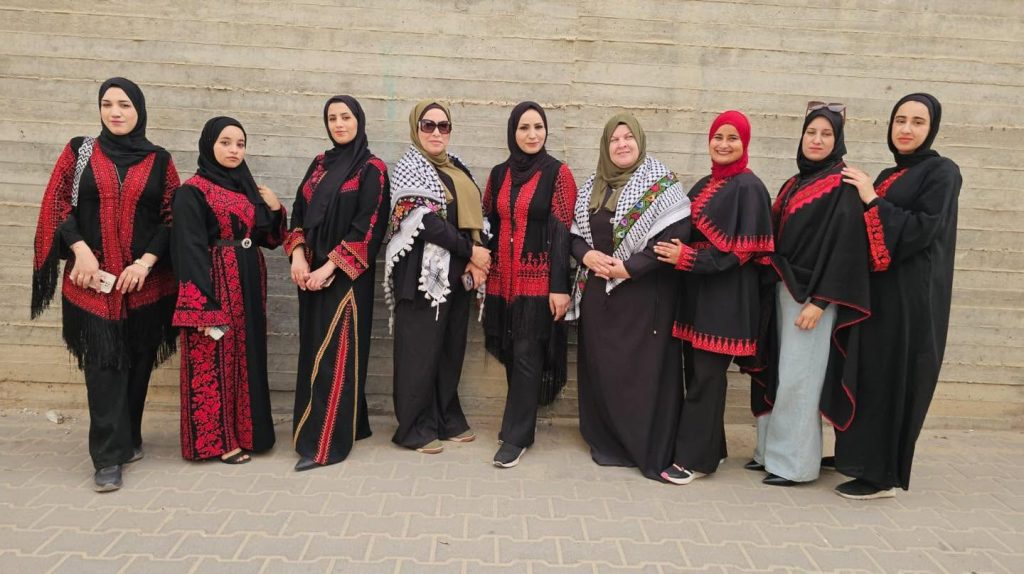
On the occasion of International Women’s Day, the Democracy and Workers’ Rights Center sends its solidarity greetings to women workers and unionists and their allies in Palestine and worldwide. We salute your collective strength and resolution to advancing women’s rights in increasingly hostile contexts. We recognize and acknowledge the courage, resilience and resourcefulness of hundreds of millions of women seeking to earn a living and ensure the survival of their families, while exposed to bombings and shootings, State-sanctioned violence and repression, displacement, ethnic cleansing and all other forms of oppression and erasure. On this special occasion, we would like to express our deep admiration for and solidarity with UN Special Rapporteur Francesca Albanese, who is facing crippling US sanctions and continuous defamation campaigns for speaking truth to power, and doing what her mandate requires, which is investigating and reporting about “Israel’s violations of the principles and bases of international law, international humanitarian law and the Geneva Convention relative to the Protection of Civilian Persons in Time of War, of 12 August 1949, in the Palestinian territories occupied by Israel since 1967.”

We call upon all feminist organizations and networks, including feminist unions, to strengthen their solidarity and cooperation locally and globally to address the immense challenges imposed on us by repeated attacks on the international rules-based order, wars of aggression, the spread of authoritarian and far-right regimes curbing basic liberties, corporate capture, and the multiplication of blatant violations of international humanitarian and human rights law of an unprecedent scale, which put us all at risk. With our sisters and brothers worldwide, we renew our commitment to work on building a world of peace and justice and equity, free from gender-based and all other forms of violence, discrimination, and exclusion.

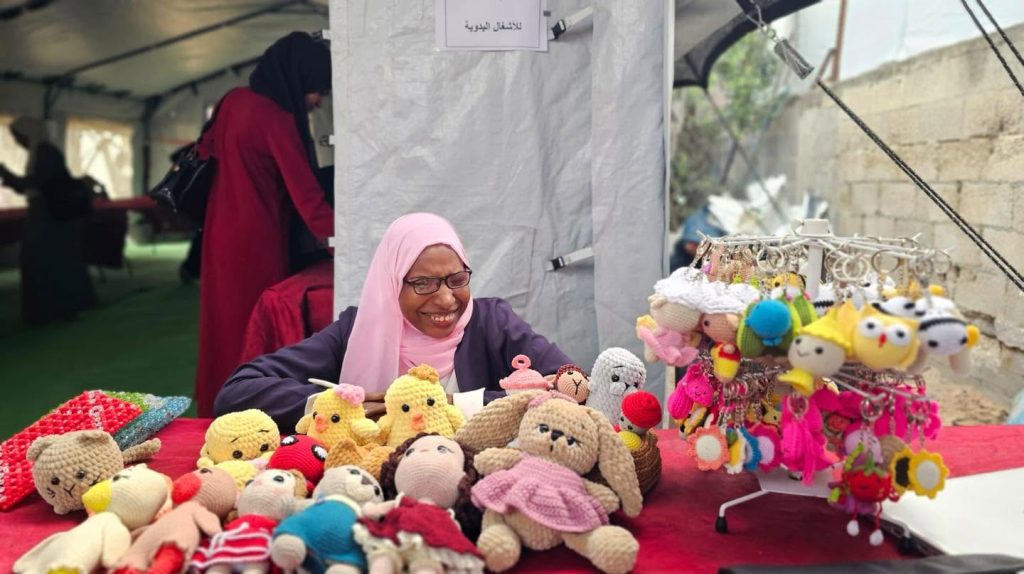
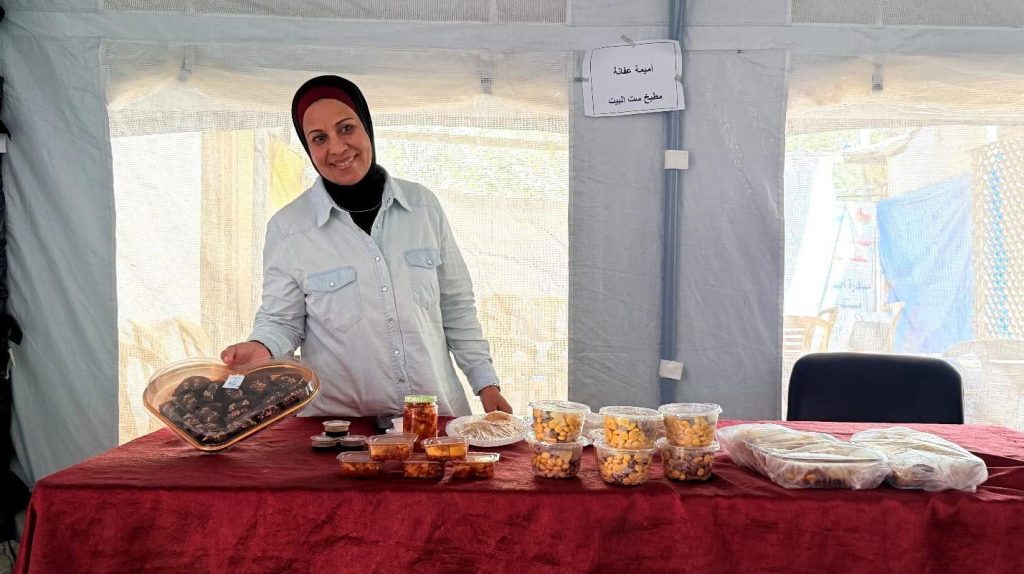
In the past two years and a half, Palestinian women have faced some of the worst circumstances imposed on humans in most recent history, including being attacked, killed, and detained because of their work, and being exposed to crimes of torture and inhuman treatment, as well as all forms of sexual violence. In the Gaza Strip, women have been struggling to regain jobs and rebuild sources of livelihoods in the rubble of their former homes, businesses, neighborhoods and cities, where over 80% of all structures have been destroyed, and early recovery still has to begin. Concentrated in less than half of the Gaza Strip area, 2.1 million Palestinians – half of them women and girls – have no access to former agricultural lands, fish-rich waters, no electricity, no running water and sanitation, and the vast majority have to live in tents and makeshift shelters. Access to goods and commodities, including essential humanitarian aid, continues to be severely restricted by the Israeli occupying power.

In the West Bank, unprecedented Israeli army and settlers’ violence causing constant insecurity, and collective punishment measures that led to spiking unemployment and poverty – including about a thousand obstacles to movement (armed and unarmed military checkpoints, metal gates, and other roadblocks) – have made it more difficult for women to gain and retain a job or run a business. Hence, women’s labor market participation has remained extremely low, reaching 18.6%, compared to 71.5% for men at the end of 2025, according to data from the Palestinian Central Bureau of Statistics. Available data also indicates that a large proportion of women workers experience unstable working conditions. The majority of women are employed in the private sector, where approximately 66% of female workers are concentrated, yet only about 25% hold formal employment contracts, reflecting the fragility of the legal and social protections available to many working women. Employment prospects of young women remain extremely bleak. The unemployment rate among young female graduates aged 19–29 with a diploma or higher was 44.5%. Brutal and destructive Israeli military operations have further exacerbated the situation of women workers in certain areas. The large-scale displacement of families from the Nur Shams, Tulkarem and Jenin refugee camps in 2025 has caused the combined loss of homes, security and workplaces for many of them. Unemployment has also been significantly higher among refugee women, reaching 33%, compared to 24.8% among non-refugee women.

Regarding social protection, the proportion of wage-earning women receiving paid maternity leave declined to 47.2% in the fourth quarter of 2025. In the absence of comprehensive labor law reform or the adoption of a social security law, paid maternity leave in the private sector remains limited to only 10 weeks. This falls short of the minimum standard of 14 weeks set out in the ILO Maternity Protection Convention No. 183.

These challenges are further compounded by the deterioration of essential services, including healthcare, which places pregnant and breastfeeding women at heightened risk. In many cases, women have been compelled to assume additional responsibilities in supporting their families and securing basic needs, alongside growing indications of gender-based violence. At the same time, some women’s organizations face operational constraints due to declining funding dedicated to programs supporting women, with several institutions now operating only partially.

The Democracy and Workers’ Rights Centre emphasizes that women’s economic empowerment and the protection of their labor rights are fundamental to achieving social justice and sustainable recovery. DWRC therefore calls on relevant authorities and decision-makers to take serious steps to strengthen legal protections for women workers, expand opportunities for decent work for women, and ensure the effective implementation of labor legislation in line with international labor standards. Protecting rights and ensuring women’s equitable participation as decision-makers and beneficiaries should be an integral part of all recovery and reconstruction plans. DWRC also calls on its international partners and fellow labor movement organizations to continue advocating for and taking concrete actions for the inalienable rights of the Palestinian people, and in support and solidarity with Palestinian women. More than ever, we need to continue joining forces and mobilizing for achieving our collective liberation.
Gaza unions appeal to stop the genocide

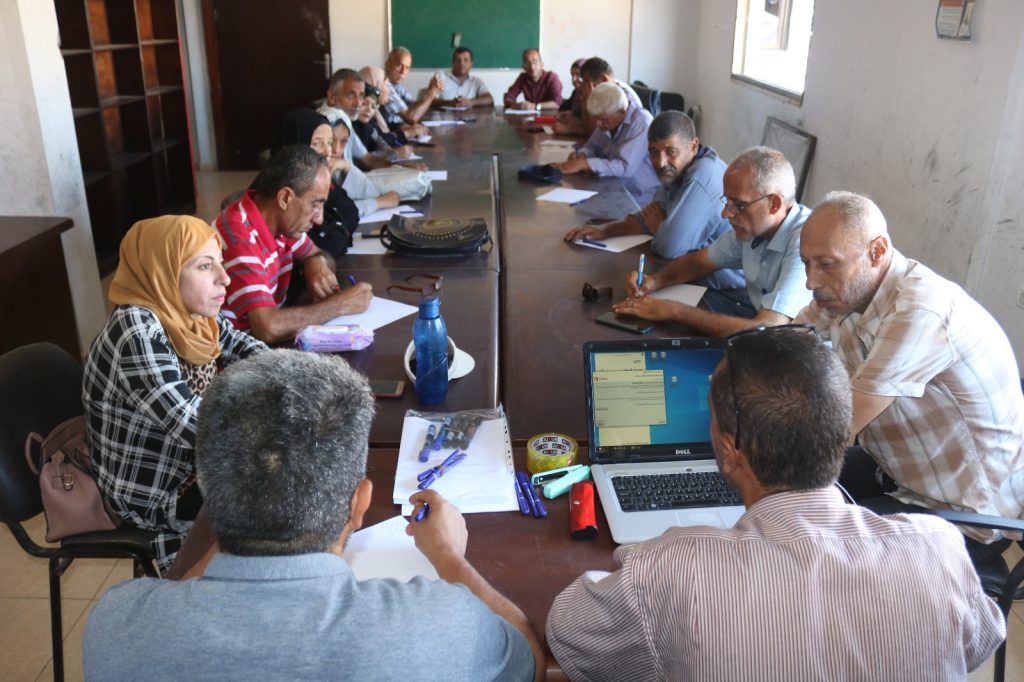
DWRC held its 15th Annual Trade Union Forum in Gaza to discuss workers’ rights and issue a global appeal to stop the genocide against the Palestinian people.

On August 18, 2025, the Gaza branch of the Democracy and Workers’ Rights Center (DWRC) held the Fifteenth Annual Trade Union Forum with the participation of several representatives of labor unions, including: the General Union of Health Service Workers, the General Union of Public Services Workers, the General Union of Media and Printing Workers, the General Union of Educational Services Workers, the Kindergarten and Day-Care Workers’ Union, the Hairdressers and Beauty Workers’ Union, the Fishermen’s Union, the Agriculture and Food Processing Workers’ Union, the General Union of Textile and Garment Workers, the Public Employees’ Union and the Palestinian Union of Social Workers and Psychologists. Alongside them were representatives of various civil society organizations and dozens of workers. At the end of the forum, participants issued the following appeal to their sisters, brothers, and comrades, leaders of labor unions and federations around the world:

An Appeal to Stop the Genocide against the Palestinian People in Occupied Gaza

For nearly two years, we have lived through the most difficult days in the Gaza Strip, days that bear witness to the crime of genocide committed by the Israeli occupying power against our children and women. Dozens of families have been annihilated in their entirety, including fathers, mothers, and children. Dozens of people have died of hunger as a result of the policies of starvation and thirst pursued by the Israeli occupation army and its political leaders to force our people to emigrate from their homeland, the land of their parents and ancestors. They have destroyed schools, universities, hospitals, governmental institutions, trade union headquarters, civil society organizations, and drinking water wells. They have destroyed factories, uprooted trees, and bulldozed farms. More than 90% of residential homes have been destroyed, and more than two million Palestinians are living in the open, with only a small number finding tents to shelter in.

We appeal to our sisters, brothers, and comrades, our fellow workers and trade union movement leaders, to stand in solidarity with us to:

  1. Stop the genocidal war against our people by pressuring your governments to take effective and impactful measures, such as stopping the supply of weapons to war criminals and imposing comprehensive economic and cultural boycotts on the Israeli occupying power, as was done to isolate the apartheid regime in South Africa. Your solidarity and union mobilization can safeguard the lives of those who have survived so far.
  2. We appeal to you to urge the opening of border crossings to allow the entry of food, water, and medicine, and to enable the wounded and sick to travel for treatment in neighboring countries and in countries willing to receive the wounded, including children, women, and the elderly.
  3. We also appeal to you to support us in providing tents, shelters, blankets, and clothing for children and women.
  4. We also call upon all labor unions and civil society organizations worldwide to show practical solidarity with the workers of Palestine and the Palestinian people through disseminating information about their circumstances, communicating with their representative and grassroots bodies, and providing all types of support within capacities and possibilities, whether moral, legal, political, relief, or developmental.

On this day, Palestinian workers are in dire need of others to stand by their side and strengthen their steadfastness on their land. Together, let us make the voice of the workers of the world and their trade union leaders heard by those who refuse to listen. Make them hear the voice of those who reject injustice, war crimes, and genocide, the voice of those who struggle for justice, equality, and the right of peoples to self-determination